Mom Diary

Alicia Shaaban

“Am I a good mother if I don't breastfeed?”

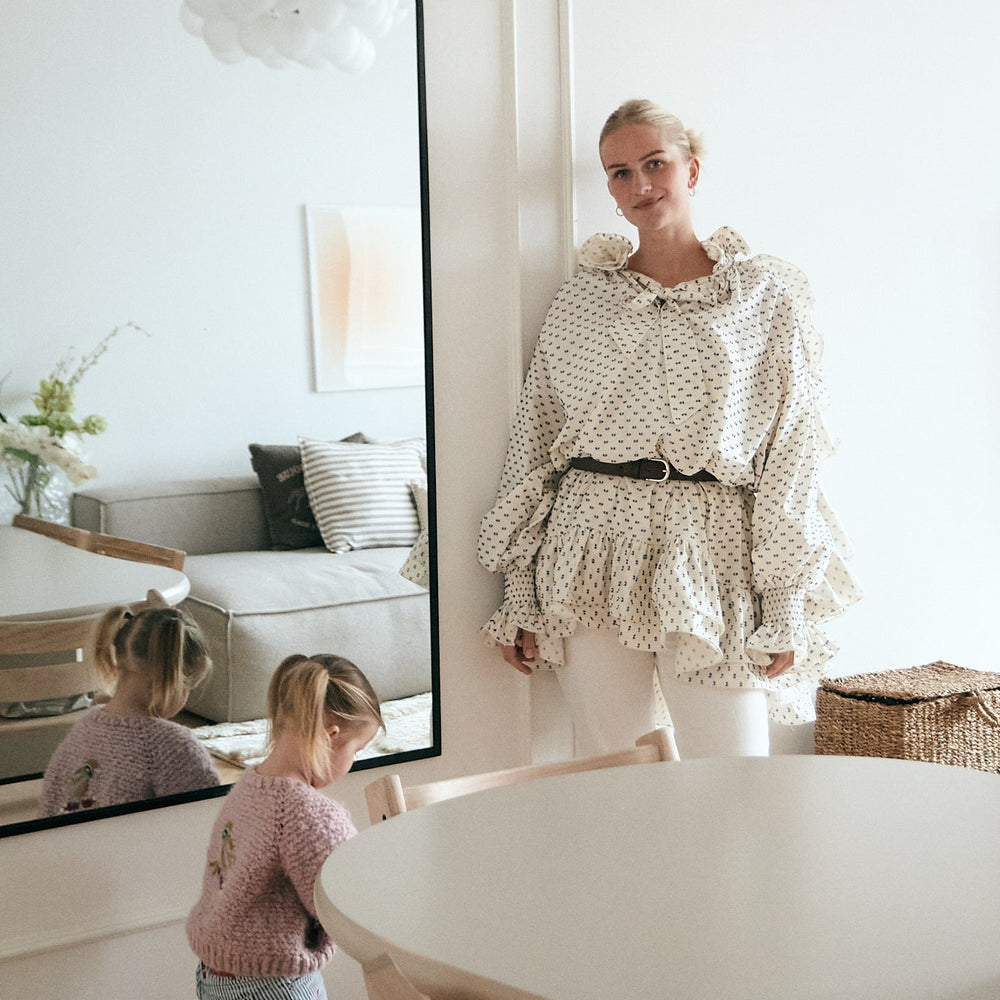
When Alicia became a mother for the first time, it came as quite a shock. The pregnancy, her body, the birth – and not least breastfeeding, which quickly became associated with pain, mastitis, bottles, and a sadness that it didn't work out as she had hoped. With Flora, breastfeeding once again became a central part of the early period. This time, Alicia was better prepared, but the process was still both physically and psychologically demanding, with open wounds, pumping, and the fear that the pain would return. In this Mom Diary, Alicia speaks honestly about breastfeeding, motherhood, the transition from one child to two – and about letting go of the idea that everything has to look a certain way.

May 28, 2026

Mom Diary

Alicia Shaaban

“Am I a good mother if I don't breastfeed?”

May 28, 2026

When Alicia became a mother for the first time, it came as quite a shock. The pregnancy, her body, the birth – and not least breastfeeding, which quickly became associated with pain, mastitis, bottles, and a sadness that it didn't work out as she had hoped. With Flora, breastfeeding once again became a central part of the early period. This time, Alicia was better prepared, but the process was still both physically and psychologically demanding, with open wounds, pumping, and the fear that the pain would return. In this Mom Diary, Alicia speaks honestly about breastfeeding, motherhood, the transition from one child to two – and about letting go of the idea that everything has to look a certain way.
Image 1

First meeting

When Alicia and Simon met nine years ago, it was through Tinder. Or perhaps more precisely: via a Super Like. They still don't quite agree on who sent it.

“We disagree so much on who gave a Super Like. He thinks it was me, and I think it was him,” Alicia recounts.

Shortly after, Simon invited her to the opening of his salon, but Alicia and her friends walked past without going in. Later, they met in town, and that marked the beginning of a relationship that has had several chapters. They have been together, apart, and together again. Today, they have two children and will soon have been married for three years.

“We've been a couple on and off for the past nine years. We've lived together, moved apart, and now we've been together for three or four years without interruptions. And we will have been married for three years this summer.”

Image 2
<p>A pregnancy that brought both joy and shock</p>

A pregnancy that brought both joy and shock

Alicia's first pregnancy with Arthur was both desired and not entirely planned. Shortly before, she had undergone major surgery to remove a cyst from her ovary and one fallopian tube. Therefore, she didn't know what it would mean for her fertility.

“We were like: if it happens, it happens, and if it doesn't, that's just the way it is. And then we were incredibly lucky that it did happen.”

But even though the pregnancy was a joy, it was also a huge upheaval. Alicia experienced her body changing rapidly, and it was difficult to keep up mentally.

“I think it came as a bit of a shock to me what it's like to be pregnant and how quickly you have to give up a lot of things.”

In both her pregnancies, Alicia gained over 25 kilos, and especially the first time, it was hard to come to terms with the bodily changes.

“My skin broke out a lot, and there were just so many changes that affected my physical appearance, which I just had to get used to, that that's how it was for a period.”

The birth of Arthur also became a difficult start to motherhood. It took 29 hours and left Alicia feeling traumatized.

“It was a huge shock to me how much it hurts to give birth and how long it can take. It really knocked me out with him.”

<p>When breastfeeding doesn't go as planned</p>

When breastfeeding doesn't go as planned

After Arthur's birth, breastfeeding quickly became difficult. Alicia developed mastitis a few days after the birth, and at the hospital, she was met with a whiteboard stating "12 feedings per day."

"I lay there looking up at that board and just thought: 12? I can't even figure out how to latch him once."

At home, Alicia and Simon tried triple feeding: first breastfeeding, then bottle-feeding, and then pumping. But with Simon back at work after 14 days and a newborn who quickly developed a preference for the bottle, it became too much.

"Every time I did it, I had to sterilize all the things I had used – both bottles and pump parts – and then start all over again two hours later."

Finally, they decided to stop breastfeeding and switch to formula. This brought peace to the family, but the grief came later.

"The actual grief about it didn't come until a few weeks later, because the energy kind of came back. Then I was like: Why didn't I fight harder for this?"

Alicia describes how she began to compare herself to others and felt that she had to be able to explain why she wasn't breastfeeding.

"I thought: Am I a good mother if I don't breastfeed? Can I join a mothers' group if I'm the only one who brings a bottle?"

Finding the courage to try again

With Flora, Alicia knew she would prepare better. She took breastfeeding classes, read books, and bought all the gear she could imagine would help. But when her milk came in on the third day, mastitis returned – this time even more severely. Alicia developed open wounds, thrush, and bacterial mastitis with streptococci.

“When she was a week old, I cried in pain during every feeding. I simply had to say: This is physically impossible.”

Image 1

For a period, they switched to bottles while Alicia pumped every two hours around the clock to maintain milk production. She received treatment, and slowly they began to re-establish breastfeeding. The hardest part was not only the physical aspect but also the fear of pain.

“Giving birth is one thing. It's like a linear experience. But with breastfeeding, you can theoretically say: I can't do this. So, you have to mentally prepare yourself each time that it will potentially hurt a lot, but I want to do it.”

After six weeks, Alicia stopped pumping between feedings, and Flora received both bottle and breast milk. When Flora was two months old, she suddenly completely rejected the bottle.

“She was just like, she wasn't having any of that. And then we were like: Well, there's nothing else to do but just keep breastfeeding exclusively.”

Today, Alicia breastfeeds Flora exclusively. It wasn't the easy way, but it was a path they found together.

“Of all the things I've experienced in my life, this was truly impressive.”

Image 2
<p>The bottle that made a difference</p>

The bottle that made a difference

During the process with Flora, Alicia and Simon used the Caramma bottle, and for them it made a big difference. With Arthur, they had used a regular bottle where the milk flow was fast, and Alicia experienced that he quickly preferred the bottle over the breast as a result.

"It's clear they think: Why should I struggle fiercely at the breast if it just flows quickly into a bottle?"

With Caramma, she experienced that the flow was more similar to the breast, and that Flora had to work for the milk.

"We used it throughout the entire period. And that, I believe, is why she didn't develop a preference for the bottle. There was never a point where she chose the bottle over the breast. It only came at the very end, when she chose the breast over the bottle."

For Alicia, the bottle also provided psychological reassurance during a period when she was unsure if breastfeeding could be re-established.

"It was a comfort to know: okay, she's getting enough. I can see she's drinking this bottle."

A Different Kind of Birth with Flora

While the birth of Arthur was long and hard, Flora's birth was a completely different experience. Alicia had feared what would happen the second time, especially because the first birth had left its mark on both her and Simon. But everything went as it should.

"She was born at Rigshospitalet on the first day the snow really fell in January. The roads were completely white, and everything was untouched." From the first contraction until Flora was out, it took ten hours. Alicia sat on a yoga ball on the floor, and in the end, it was Simon who delivered their daughter.

"I stood up, and he was on one side and the midwife on the other, and then he pulled her out."

For Alicia, it was a beautiful and strong experience – and an important counterpoint to the first birth. "Everything happened just as it should."

Image 1

Going from one child to two

The transition from one child to two has, in some ways, been easier than Alicia feared. She doesn't describe it as a total shock, as it was the first time she became a mother. More like an expansion of the life they already had.

“Now, it's just an addition to the loving chaos that already exists.”

But the hardest part has been her relationship with Arthur. Alicia and Arthur have always been very close, and during her maternity leave with him, they were together every day for an entire year. That's why it hit her hard when she suddenly had to say no to him.

“Before, we were very much like, if he wanted something, we would just come and do it with him. Now, you often have to say: No, I just need to change her diaper.”

Image 2

Alicia perceived it as small rejections, even though Arthur actually took it well. When she finally had her hands free, he might reject her back. "He was like: No, I don't want to play with you, I don't want you. And you just had to swallow that and know that it wasn't about me."

One of the things that has surprised Alicia the most is the feeling of never quite settling into herself. When she's not with Flora, she's with Arthur. When she's not with Arthur, she's with Flora. "There isn't that thing where you were just yourself. There's always just someone with you."

At the same time, she feels that Arthur suddenly seems much bigger after Flora came into the world. "When we got home, it was as if Arthur just became twice as old from one moment to the next, because she was so small."

The small milestones feel bigger and more vulnerable now. That he throws his pacifier away. That he runs into kindergarten by himself. That he's growing up, while she's also trying to keep up with Flora.

"Sometimes I feel like: Stop time. I don't have enough eyes to keep track of everything that's happening here."

<p>Dream of Møn</p>

Dream of Møn

Although Alicia and Simon love city life in Nørrebro, they have long shared a dream of a different daily life. Simon grew up on Møn, and ever since they met, they have talked about moving there one day.

"We'd like to live on a small farm down there. That's been our conversation since we met."

The dream is about more peace, more presence, and a daily life where the children can run outside and be closer to nature.

"It's a bit of a different daily life than here."

For now, the dream is a long way off.

<p>Alicia's advice for other mothers</p>

Alicia's advice for other mothers

When Alicia has advice for other mothers, it's simple: lower your expectations.

"It's okay to lower your expectations for yourself."

For Alicia, motherhood has taught her that ideals and perfection can quickly become an extra burden. That the home is not always tidy. That you don't always look the way you imagined. That some days just come together the way they do.

"Sometimes it's just really messy, and you're wearing the same sweatpants, and you have no idea what day of the week it is. And that's okay, as long as the kids are happy and you yourself are happy."

And perhaps it is precisely there, in the imperfect and messy, that everyday life with small children is allowed to be good enough.

"Then it's okay. Then that's the margin for having a good life."

Photo: Cecilia Jørgensen

Art Direction & Text: Laura Gilling Rosenberg