Latest Mom Diary

Frederikke Lykke Lindh

"I didn't want to only see my children for a few hours a day. For me, it makes more sense to be close to them while they're little."

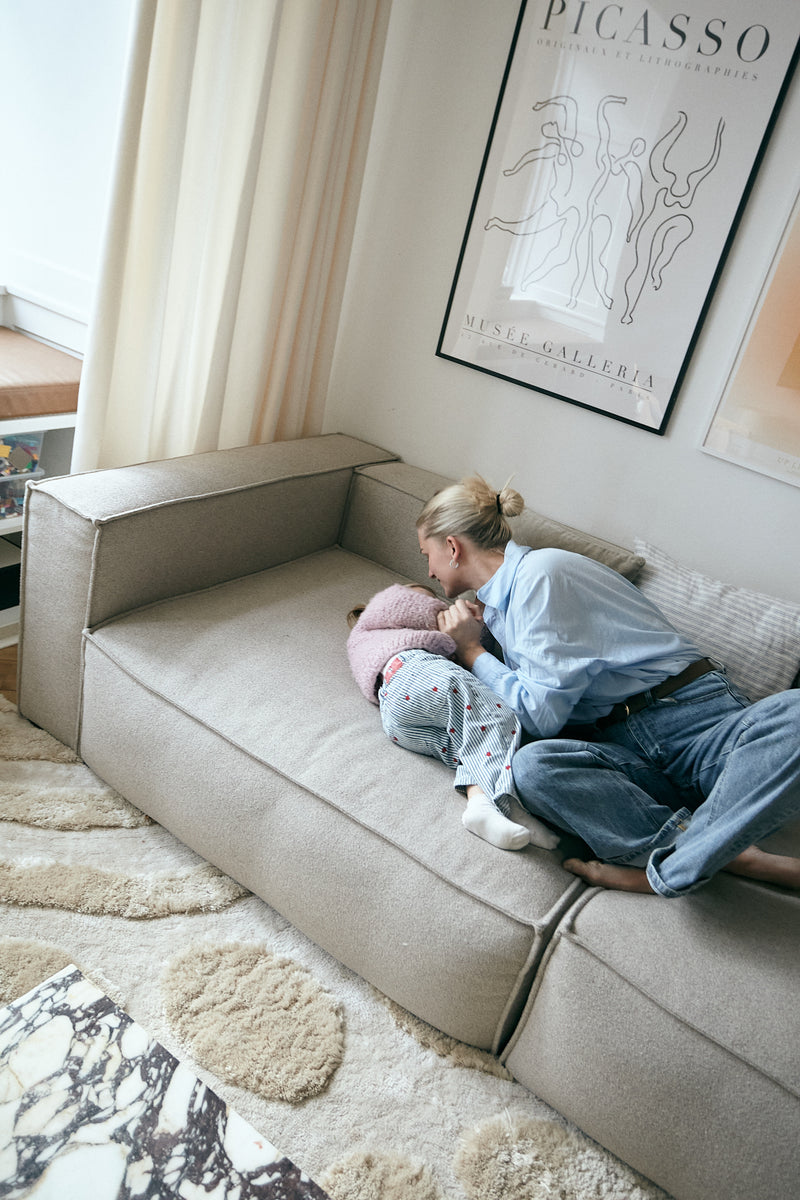
Frederikke Lykke Lindh is 29 years old, lives in Frederiksberg with her boyfriend and their three children, and lives a life where motherhood and ambitions are not in contrast – but exist side by side. She is studying to become a midwife, works as a birth therapist, and shares glimpses of her life on Instagram. But the foundation is the same: a fundamental calm in her role as a mother – and a clear awareness of how she wants to live her life.

23 April 2026

Latest Mom Diary

Frederikke Lykke Lindh

"I didn't want to only see my children for a few hours a day. For me, it makes more sense to be close to them while they're little."

23 April 2026

Frederikke Lykke Lindh is 29 years old, lives in Frederiksberg with her boyfriend and their three children, and lives a life where motherhood and ambitions are not in contrast – but exist side by side. She is studying to become a midwife, works as a birth therapist, and shares glimpses of her life on Instagram. But the foundation is the same: a fundamental calm in her role as a mother – and a clear awareness of how she wants to live her life.
Image 1

Mother at 22

She met her boyfriend one evening in her apartment in Indre By. A mutual friend had spontaneously brought him along to a pre-drink gathering at her place. She had essentially put love on the back burner, but when he walked through the door, something shifted. An immediate clarity – a feeling that this was the person she was meant to build a life with.

Three months later, she was pregnant. Unplanned. But absolutely right.

At 22, she became a mother to her first child – and stepped into motherhood with an ease she only later understood was not a given.

“I just loved it. Being pregnant, giving birth, breastfeeding. I had no doubt that this was what I was meant to do.”

Image 2
<p>A calling that grew out of motherhood</p>

A calling that grew out of motherhood

That feeling didn't disappear. It grew.

Two children became three in just a few years, and while many experience pressure to return to something else, Frederikke found peace in motherhood itself. She shaped her life around her children – not as a compromise, but as an active choice.

But at the same time, another realization began to take shape.

Working with births, with women, with the transition to becoming a family. Not as a career to be achieved – but as a natural extension of the life she was already living.

She started midwifery school, where she miraculously got in through quota 2.

Being a student with three small children requires structure, prioritization, and flexibility. But precisely this flexibility also became a strength – and a way to create a daily life that works.

“I like that every day isn't the same. That some days I can have my children at home, and other days be in the clinic. It gives a freedom that suits the way we want to live.”

<p>A break with the obvious</p>

A break with the obvious

For Frederikke, her choice is not just about herself – but also about questioning what many take for granted.

The classic structure of drop-off, full-time work, and late-day pick-up is not something she has uncritically embraced.

Not because it can't work. But because it's not the life she wants.

“I've never been a fan of the rat race. That thing with picking up at 4 PM, coming home to tired kids, and starting over the next day – that's not the everyday life I want.”

Instead, she has created a daily life where flexibility is the foundation. Where the children sometimes stay home, and where pick-up ideally happens around 2 PM.

It requires priorities. And making choices to opt out.

But for her, it's about taking responsibility for the time that won't come back.

“I didn't want to only see my children for a few hours a day. For me, it makes more sense to be close to them while they are small.”

When the lightness didn't come the third time

Although her first experiences with motherhood were marked by a natural ease, this changed significantly with her third child.

Her first two births had been uncomplicated. She had a strong trust in her body, and things had gone as they should. Therefore, choosing a home birth the third time felt like a natural next step.

Image 1

However, the birth did not go as planned.

The situation developed, and for a period, her daughter was very ill. Instead of the calm, secure experience she had imagined, she suddenly found herself in a completely different situation – marked by uncertainty and fear.

The time after also did not go as she had known it.

Breastfeeding did not work from the start. Where she had previously moved effortlessly into motherhood, she was now confronted with a reality that demanded something different from her. She stayed home more. Doubted herself more. Became more aware of everything that could go wrong.

"I didn't recognize myself. Suddenly, it wasn't just something that worked."

Image 2

At the same time, she had two small children at home who still needed her. The transition from two to three was not the smooth progression many people talk about – but a period where everything demanded more. More energy. More patience. More of her.

It became a turning point.

Not because it changed her values – but because it expanded her understanding of what motherhood can also be. Not just easy and intuitive, but also vulnerable, unpredictable, and demanding.

An experience she now brings to her work when she meets women who are in the same situation.

<p>Motherhood is not a break</p>

Motherhood is not a break

One of the things Frederikke most clearly insists on is the way we talk about motherhood and maternity leave.

For her, it makes no sense to view it as a break from "real" work. On the contrary.

"You're there 20 hours a day. When it doesn't work, it's just non-stop. It's a full-time job."

Nevertheless, maternity leave is often reduced to something temporary. Something to be gotten over.

She challenges that narrative.

Not by romanticizing – but by insisting that it has an inherent value.

"I think it's wrong to view maternity leave as a losing venture. You are contributing something far more important than it's given credit for."

Image 1

A different pace – not a different life

What Frederikke is actually questioning is not just the structure of family life – but its pace. The idea that everything must move forward, be optimized, and fully utilized.

For her, it makes sense for life to slow down at times. For there to be phases where something is allowed to take up more space, without needing justification.

“It's okay for life to move a little slowly at first. That's what you need right now.”

This is not a resistance to development.

But an acceptance that not everything has to happen at once.

Image 2
<p>The dream of a fourth child – maybe</p>

The dream of a fourth child – maybe

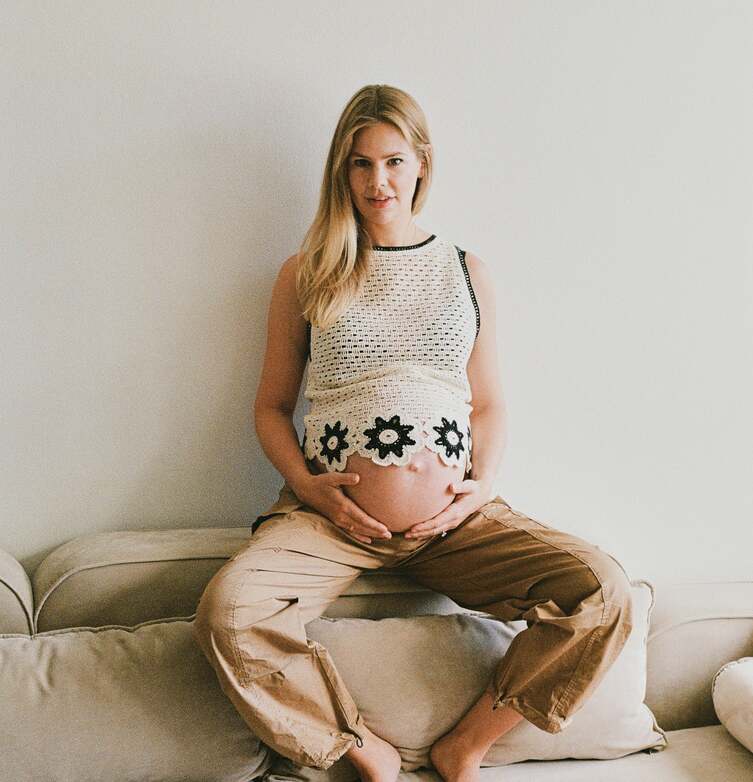
Amidst the calm she has created, a movement still lives. The thought of a fourth child is there. Not as a plan, but as a feeling.

“Everything in me wants to be pregnant again. But at the same time, there is also a calm right now that is hard to let go of.”

For the first time, there has been a longer gap between the children. Everyday life works. There is an abundance of energy. And precisely for that reason, it's not a decision made lightly. It encompasses both the desire for more – and the wish to preserve what already exists.

Perhaps that is precisely where her approach to motherhood becomes most evident.

Not as a break from life – but as a central part of it.

A place where ambitions and presence do not exclude each other, but are allowed to coexist.

Where it is possible to be a student and a mother. To pursue something – without letting go of what is already important.

Foto: Cecilia Jørgensen

Art Direction & Tekst: Laura Gilling Rosenberg