
Tips and Tricks

WHY YOUR BABY WAKES UP AT NIGHT...

Babies wake up at night, just like we do. When babies wake up after a sleep cycle, they often need their parents' help to fall back asleep.

When babies wake up after a sleep cycle, they often need their parents' help to fall back asleep. Some babies can fall back asleep just fine, even after a sleep cycle, but most babies need a little help.

Breastfeeding counselor Sara Degn gives some good advice on what you can do at night.

October 3, 2024

Hero Image
Sara Degn

Sara Degn

Sara Degn er certificeret ammevejleder med speciale i ammeetablering og den første tid med barnet. Hun brænder for at skabe ro og tryghed i amningen gennem personlig rådgivning og faglig vejledning til nybagte mødre.

<p> This is why you should breastfeed at night</p>

This is why you should breastfeed at night

Many parents are told that their baby doesn't wake up to be breastfed after 6 months of age and that nighttime breastfeeding is not necessary after 6 months. A study I reviewed shows that some babies start to take longer naps around 6 months. But that doesn't mean that breastfeeding is no longer necessary after 6 months.

Many parents introduce their baby to solid foods from the age of 6 months. Another study shows that the baby does not necessarily sleep for longer periods of time after starting solid foods. The same study had examined the pattern of nighttime awakenings of 55,000 babies aged 6-18 months. Here they found that 70% of them still woke up about 1-3 times a night, and most of those awakenings needed to be breastfed.

When a baby wakes up to be breastfed at night, it is not necessarily because the baby is hungry. Many parents are told that if the baby wakes up many times at night to breastfeed, it is because the baby is not getting enough milk. Parents are also told that if the baby only breastfeeds for a few minutes at a time at night, it is because the baby is not getting enough milk. It is completely normal for the baby, especially as it gets a little older, to breastfeed for a few minutes and then fall asleep again. This short breastfeeding is not a sign that the baby is getting too little milk, either during the day or during the night.
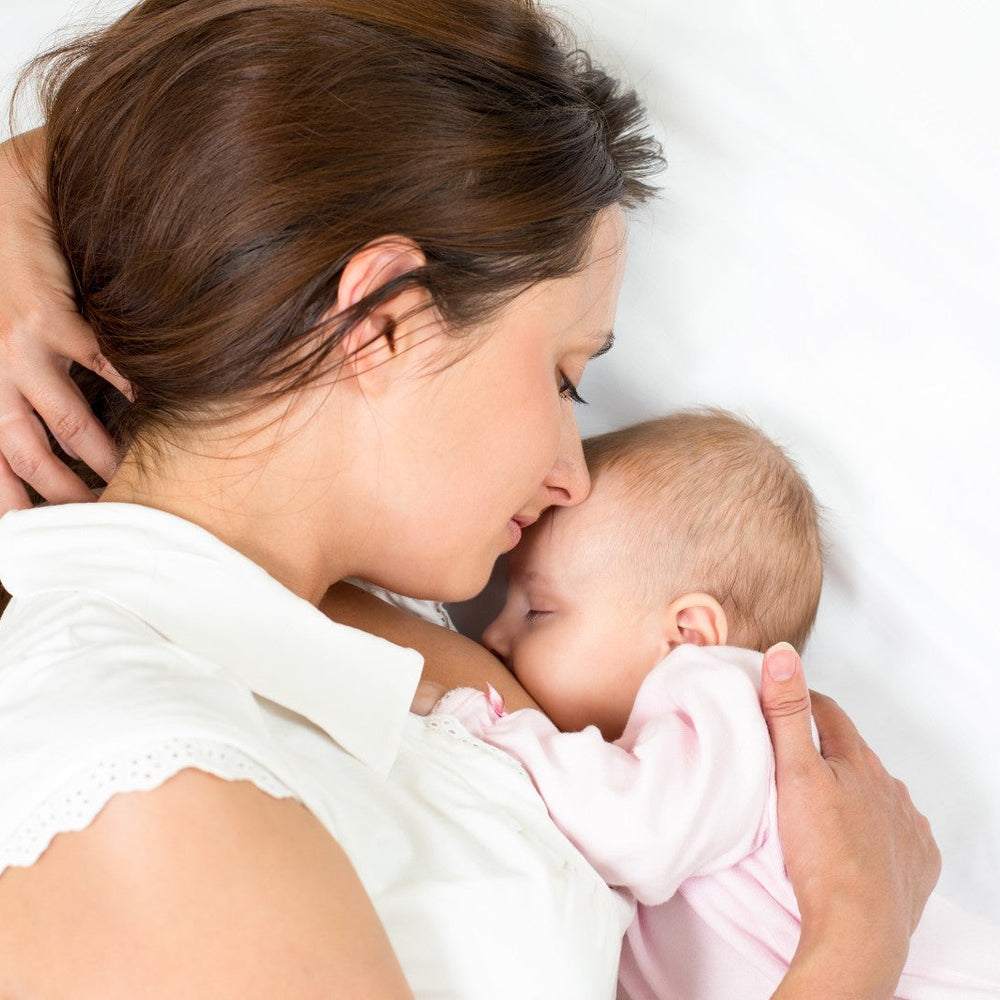

Baby's needs at night

I have counseled parents who have been told that frequent and short breastfeeding at night means that the child does not get enough milk during the day and/or during the night. That the child, due to the frequent breastfeeding, does not get enough milk per breastfeeding. These parents are most often instructed to give formula in a bottle or breast milk in a bottle, at night, instead of breastfeeding.

Most often, frequent and short breastfeedings get the baby to sleep right back. I actually also think that if the baby falls asleep quickly, then that's a good way to get the baby to sleep, rather than having to walk around rocking or something. I have previously counseled parents (both breastfeeding guidance and sleep guidance) who have been told that they should not let their baby breastfeed at night. But if it works, if the mother can be in it, if it's quick and the baby falls asleep again, then why not continue with it?

We cannot avoid the fact that the child wakes up at night. Breastfeeding does not have to be the only tool that parents use to get the child back to sleep. It may be that the other parent can get the child to fall asleep again in another way. However, many children do not find peace to fall asleep again unless they are breastfed. When the child wakes up to breastfeed at night, it will most likely become completely drowsy after breastfeeding, the child may 'sleep' through breastfeeding, which is also completely normal. Breastfeeding has a calming effect on the child.

When baby is breastfed

When the baby is breastfed, 3 hormones are released:

Leptin: Released while the baby is breastfeeding and after breastfeeding. The hormone makes the baby feel full.

Cholecystokinin: This hormone also makes the child feel full and the child will be able to fall into a deep sleep with the help of this hormone.

Brain-derived neurotrophic factor: Reduces appetite and makes the child tired.

In short, these hormones make the child calm and tired.

Many mothers have asked me if they should wake their baby at night to breastfeed. This is especially true for mothers of babies who sleep for long stretches at night. To that, I can only answer that you should look at your baby. If your baby is generally doing well, if your child is gaining weight and if your child still has good diapers during the day, then there is nothing wrong with letting the child sleep. However, it is important that the child is more than 28 days old.

I do not recommend letting the baby take long stretches at night if the child is under 28 days old. If it is a small baby, there are a few other things to look at. If you have made a good start with breastfeeding establishment and milk production, then you can let your baby have longer stretches. Here, the mother can possibly breastfeed the child while he is sleeping, just before the mother herself goes to bed. The milk adapts to the child's needs.

If the mother has very full breasts at night, it may be a good idea to breastfeed the baby while she sleeps. It is also important for the mother to make sure that milk production does not decrease due to few nighttime feeds.

Do what is easiest for you. It varies a lot how much babies breastfeed at night. Some sleep for long stretches at a time, others wake up once an hour or more often. Maybe you can make it work with co-sleeping? Here the mother does not have to get up and out of bed to pick up the baby to breastfeed.

As parents, you are welcome to co-sleep with your children. The Danish Health Authority recommends that parents co-sleep with their child for at least 6 months.