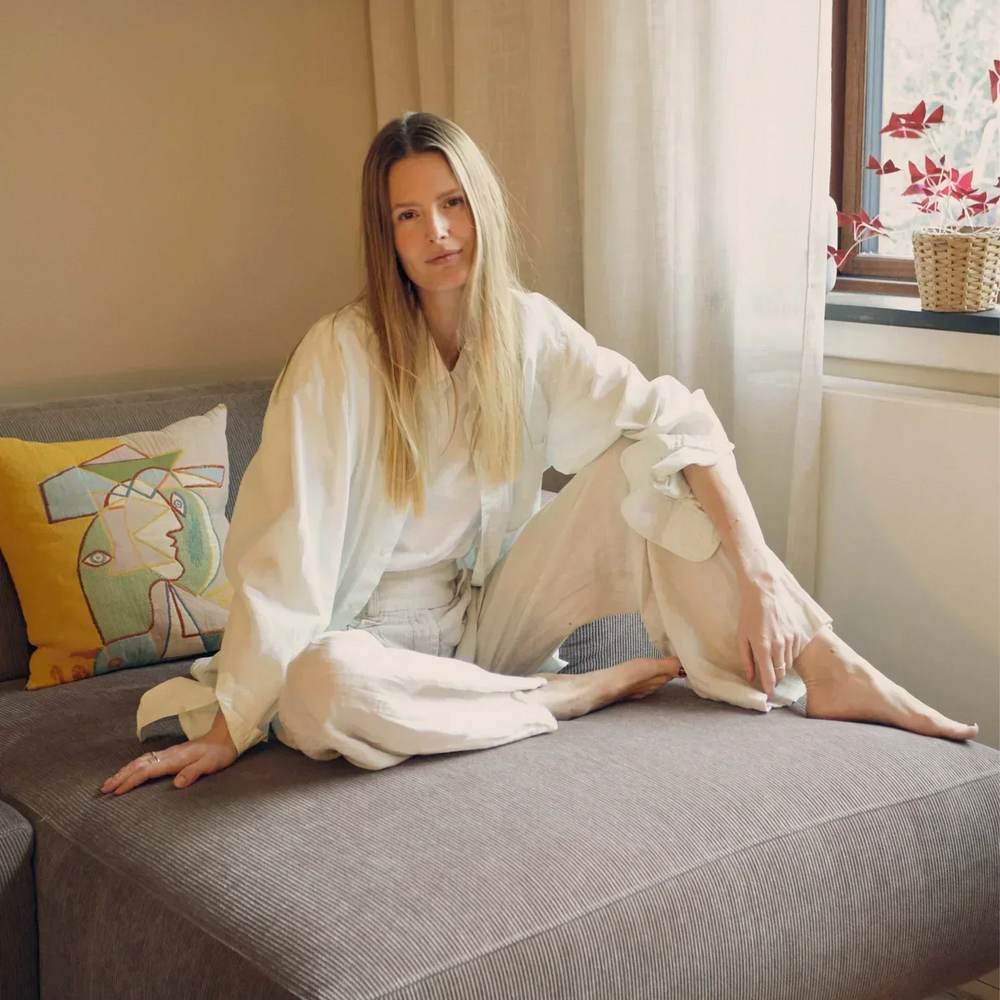
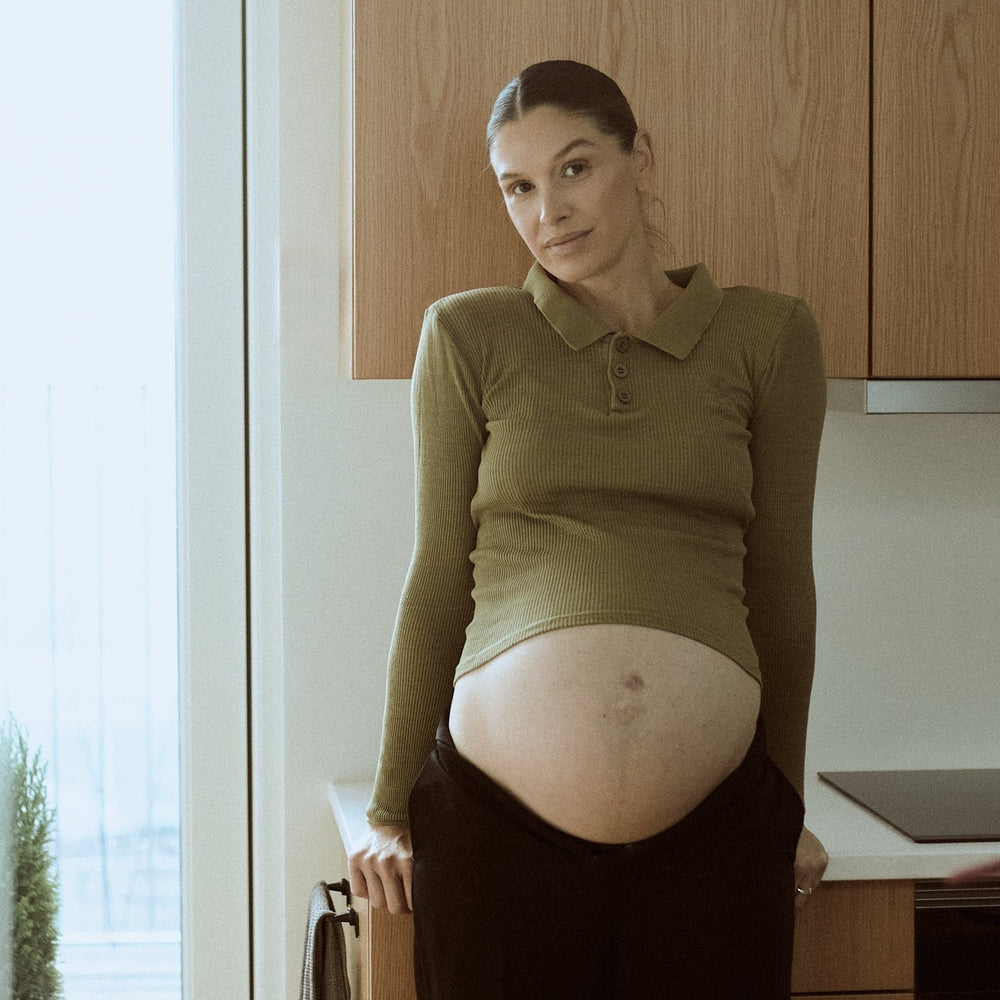
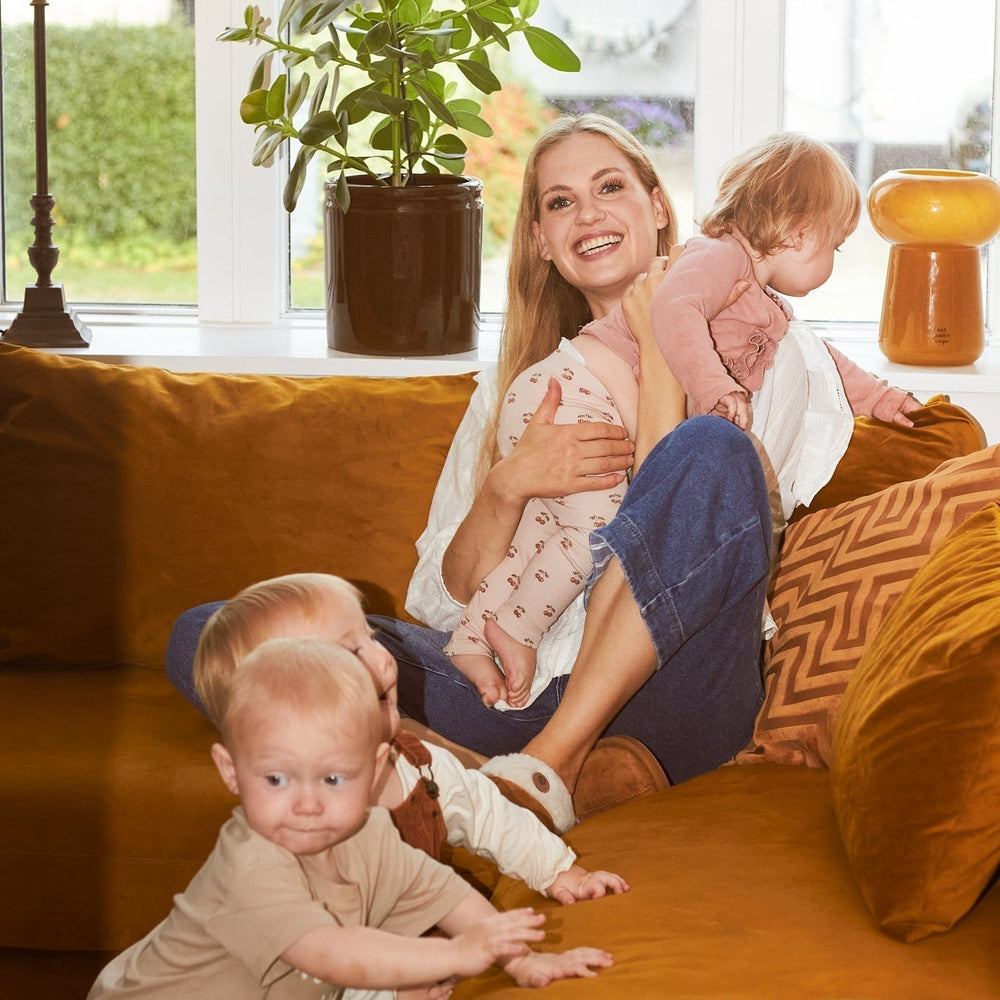
For Katarina, the desire for motherhood was not something that suddenly arose, but something that has been quietly lurking in the background throughout her life. She is 27 years old and became a mother to Alfred for the first time just over two months ago. Even as a child, she imagined a working life close to children, and her family has never doubted that it was natural for her. She didn't know if she wanted to be a young mother, but she knew that she wanted to be a mother – and perhaps she hoped that it wasn't too far in the future.
Latest Mom Diary
BECOMING A MOTHER – FIRST IN A GROUP OF FRIENDS
"I'm still me. Just plus him."
Katarina Krebs became a mother to Alfred at the age of 27 – the first of her group of friends. In this Mom Diary, she shares her honest and reflective thoughts about pregnancy, birth and the time after, but especially about the inner shift that comes with entering motherhood before those around you. It is a reflection on balancing the desire to still be yourself with the need to make room for something new, on comparison, expectations and the quiet realization that you do not disappear as a person when you become a mother – you are expanded.
January 29, 2026


Katarina Krebs became a mother to Alfred at the age of 27 – the first of her group of friends. In this Mom Diary, she shares her honest and reflective thoughts about pregnancy, birth and the time after, but especially about the inner shift that comes with entering motherhood before those around you. It is a reflection on balancing the desire to still be yourself with the need to make room for something new, on comparison, expectations and the quiet realization that you do not disappear as a person when you become a mother – you are expanded.
A longing that has always been a part of her

The meeting with Anders
Katarina had followed Anders on social media for several years and found him interesting, but never imagined that their paths would one day cross.
One day he wrote to her. Not to flirt or ask her out, but to ask where a flea market Katarina had organized was taking place. She still remembers the mixed feelings when she replied – the joy that it was him who wrote, and the thought that maybe it was just practical. Shortly after, he asked if they should go there together.
Their first date was a daytime flea market. No wine, no dinner, no expectations.
“Anders doesn't drink, and he hasn't for many years, so we've never had the classic dating culture. We had all sorts of strange – but really good – dates. You have to be more creative, and it's actually during the day that you really get to know each other.”
The flea markets became their common ground, and their relationship quietly grew from there. Two years later they got engaged, and for Katarina it was never a question of who she wanted to have children with – it had come naturally long before it was said out loud.

The first signs
When Katarina became pregnant, she was in denial for a long time. She was in Paris with her friends, her period was late, and even though Anders gently suggested that she take a test, she couldn't handle it.
“I just couldn’t handle knowing that,” she says. “Especially because I knew I wouldn’t tell them right away.”
However, her body began to quietly send signals that she couldn't ignore. The wine tasted wrong. The urge to smoke disappeared. And when she came home and threw up after dinner, she gave in and took the test. It was positive, and she was already five to six weeks along. It wasn't a moment of panic, but of a quiet realization that something had begun that couldn't be undone.

A pregnancy with room for thoughts
The pregnancy was physically good. Katarina experienced her body as strong and functioning well, and although there was a little nausea at the beginning, that was not what mattered most. What mattered were the many thoughts about the future she was entering.
“I thought a lot about it,” she says. “Not because I was scared, but because it’s a big transition.”
Especially around week 30, she became more aware of her body and its signals. Not as a whirlwind of thoughts, but as a heightened awareness, where hormones also played their part. She began to notice contractions, small changes in her body, and the way her thoughts revolved more around the life that awaited her on the other side.

The waiting time after the due date
Katarina was nine days overdue, and the wait became a strange mix of anticipation and stagnation. The due date had been a constant point of reference throughout her pregnancy—the day everything revolved around. And when it passed without anything happening, it left an emptiness she hadn’t anticipated.
“Your due date is really strange because it's the day you've been anticipating for nine months. You think that's the day it's going to happen . And then it's just so anticlimactic. You go to bed, wake up the next day, and it's just the same day again. You just sit and wait, all the time with the feeling that it could be now – and at the same time nothing happens.”
The days passed, and even though she knew labor could begin at any time, the time felt both long and unreal. It was only after the membranes broke and acupuncture to induce labor that labor began.

An intense birth carried by trust
The contractions started in the evening and were intense from the start. Katarina used all the tools she could from the start – yoga ball, heating pad and focus. They went to Rigshospitalet early, not least to avoid the morning traffic, and when the baby's heartbeat turned out to be a bit irregular, they quickly got a delivery room.
“I actually felt safe the whole way through,” she says. “I could feel that it was taken care of.”
After the epidural and later the ve-drop, things suddenly went quickly. From three to ten centimeters in two hours. The pushing phase became intense, and the suction cup became necessary, but Katarina felt present and in control the whole time. Alfred came out quickly, screamed immediately, and the relief was overwhelming.
“I actually think it was really cool to give birth,” she says. “Not easy – but good.”

The body afterwards and all that, no one really prepares you for
Katarina experienced the time in the maternity ward as a safe place to land, with peace and help close by. But it wasn't until they got home that she really realized what childbirth had done to her body – and how little she had been prepared for what would follow.
“I don't think anyone understands what it feels like right after. There's so much focus on the birth itself, but hardly anyone talks about the days after. I felt like I'd been run over by a train – everything hurt, and I had no idea how intense it could feel.”
The pain in her body, her back after the epidural, and the second-degree tear were accompanied by an uncertainty she hadn't expected. The fear of whether her body would heal as it should filled her more than she had imagined – and it took time to regain her confidence.

Being the first mom in the group of friends
One of the things that meant the most to Katarina was being the first among her friends to become a mother. Not because her friends expected anything from her, but because she did it herself.
“I think I had a feeling that I had to show that I was still me and that I could still do it all. I pumped early so I could go to things, took the initiative to make appointments and stuck to the version of myself I knew – until one of my friends said: you're just Kata plus baby . And that really hit me.”
The words were a relief. A realization that she didn't have to hold on to the old at all costs, but could make room for both herself and the relationships around her to develop in step with the new life.


Giving yourself space – without explanation
Today, Katarina practices taking her own space seriously. Not as a statement, but as a necessity. Space to retreat when she breastfeeds. Space to say no to visits that drain more than they provide. Space to be alone – without it needing to have a purpose or an explanation.
“I didn’t know how overstimulating it could be to breastfeed and be social at the same time,” she says. “I just felt like it was all too much.”
For her, it was an important realization that it is completely okay to go into another space. To take a break in the middle of socializing. Not to withdraw from the world, but to be able to be in it. It is not about shutting others out, but about taking yourself seriously in a time when everything is new – both in the body and in the mind.

The future – with peace, flexibility and open doors
Katarina and Anders both have flexible working lives, which has allowed them to take the transition to family life at their own pace. They have started working again in small steps and are gradually figuring out how Alfred can also be a part of the life they are building – without anything being forced.
Along the way, Katarina has gathered her own little experiences, which she is happy to share. That wrap-bodysuits are much easier than clothes that have to be put over a newborn's head. That a little blow-drying heat when changing diapers can make a big difference. And that it is often the small adjustments that make everyday life more gentle - both for the child and for yourself.
But most importantly, she has learned that there is nothing to achieve. The future is not set. She dreams of more children, maybe three, and of new projects that fit the phase of life she is in now. But without rushing.
She's still herself. Just plus him.
Foto: Cecilia Jørgensen
Art Direction & Tekst: Laura Gilling Rosenberg